Subscribe to our newsletter to get the latest news on our programs, initiatives, and events!

7.15.26 – Tao, po! Lessons from Culturally Responsive Voter Engagement and Community Organizing Beyond Election Season


Half the year has already gone by – so much has happened since we started our program season, including our voter engagement work.
With the Primary Elections concluding a little over a month ago, we have been reflecting, regrouping, and analyzing the results of the elections – and most especially, what we learned through our Get out the Filipino Vote (GOTFV) efforts.
While it is easy to quickly move on to the next campaign or initiative, we believe pausing and assessing what worked and what did not is crucial to sustaining our work.
This past spring, our GOTFV campaign aimed to contact 15,000 Filipino and Asian American Pacific Islander (AAPI) voters across California, Nevada and Texas. To achieve this goal, our members and field organizers canvassed and called voters in San José, Daly City, San Diego, Las Vegas and San Antonio.
At the end of our program, we reached over 99,000 voters—and we are just getting started.
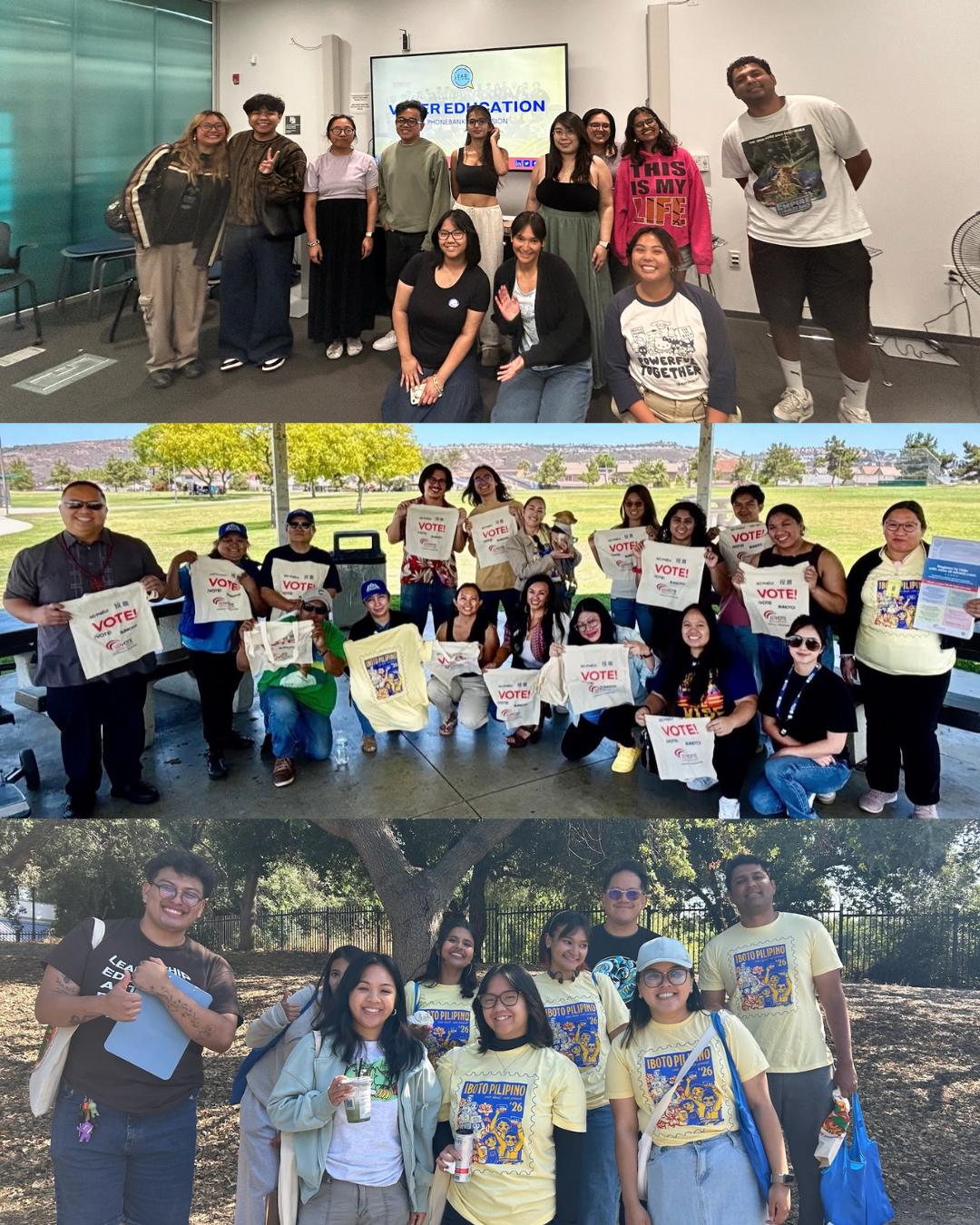
As we approach the General Election on November 3rd, voters will decide upon critical statewide offices and ballot measures ranging from social services funding, education, and major infrastructure projects to electing a new governor and all statewide constitutional offices. From shaping policies and passing laws that impact our healthcare, jobs, housing, affordability and overall livelihoods, who we elect is important. However, ensuring registered voters become engaged residents is even more crucial during this time
From Registered Voters to Engaged Residents
So, what does it look like to convert registered voters into engaged residents?
As a nonprofit organization focused on increasing Filipina/x/o American civic representation and participation, I would like to share what we learned when knocking on our Filipino neighbors’ doors this past spring and offer recommendations.
We were often greeted with smiles and shock.
Many of the households reported that they were never canvassed by a Filipino organization.
For example, one Tita (Auntie) in San José excitedly told us she turned in her ballot early and chirped about her Filipina/x/o neighbors down the street, encouraging us to knock on their doors.
In Texas, voters repeatedly told our team it’s the first time ANY Filipino organization reached out to them about voter resources and demystified the voter process for them.
In Las Vegas, we were able to reach multiple AANHPI voters who have been called once or twice, but still pleasantly surprised that organizations like ours exist to build people power.
However, for as many “Salamat” (Thank You) and “I’m so glad you called” moments, we were also met with apathy and discouraged voters. We would go as many as 6 or 7 phone calls in a row, ending with an immediate hang-up or “I’m not interested”. We’ve also had hostile community members who’ve cursed at our canvassers or spiraled into the losses our community has faced under the current administration.
WHAT DOES IT MEAN THAT FILIPINOS ARE NOT BEING REACHED OUT TO? WHY IS THIS WORK IMPORTANT?

Despite Historic Levels, Primary Election Turnout Lags Compared to General Elections
How did we do?
According to the Secretary of State websites for California, Nevada and Texas, we saw historically high turnout rates compared to past years.
According to the Public Policy Institute of California, voter turnout was “higher this cycle (34%) than in any midterm primary since 1982.” Final figures show that 40.8% of eligible Californian voters participated in the primary election. In Santa Clara County, where LEAD Filipino primarily operates, participation rates stood at 39.2% and in San Diego County at 42%.
In Texas, there is a closed primary, in which voters receive and return ballots based on their party ID at registration. As shown by the dwindling number of counted ballots, a 2022 study by the Brennan Center, followed by further analysis in 2025, shows the impact of voter suppression laws. To assist with voter turnout, we supported one of our organizers to train as a Volunteer Deputy Registrar, as voter registration needs to be completed in person in Texas. The long and winding process made it difficult to register voters, much less turn them out for the Primaries.
In Las Vegas, we saw a statewide turnout of 21%, and our stomping ground in Clark County polling at 18.29%. While lower in comparison to our other chapters, this is significant growth from the 2024 Primary, where 16.22% of eligible voters turned out (Secretary of State, Nevada).
| Election | Party | Primary | Run-Off |
|---|---|---|---|
| Texas (State ) | Republican | 11.61 % | 7.35% |
| Democratic | 12.35% | 2.92% | |
| Bexar County | Republican | 7.3 % | 5.37% |
| Democratic | 14.62 % | 4.49% | |
| California (State) | 40.8% | ||
| San Diego County | 42% | ||
| Santa Clara County | 39.2% | ||
| Nevada (State) | 21.81% | ||
| Clark County | 18.29% |
The trend we see across our chapters is what we expected, but hopeful. In the General Election, we will continue to empower our kababayan (neighbors) to turn in their ballots and participate in a system that is built on democracy, justice, and fair representation.
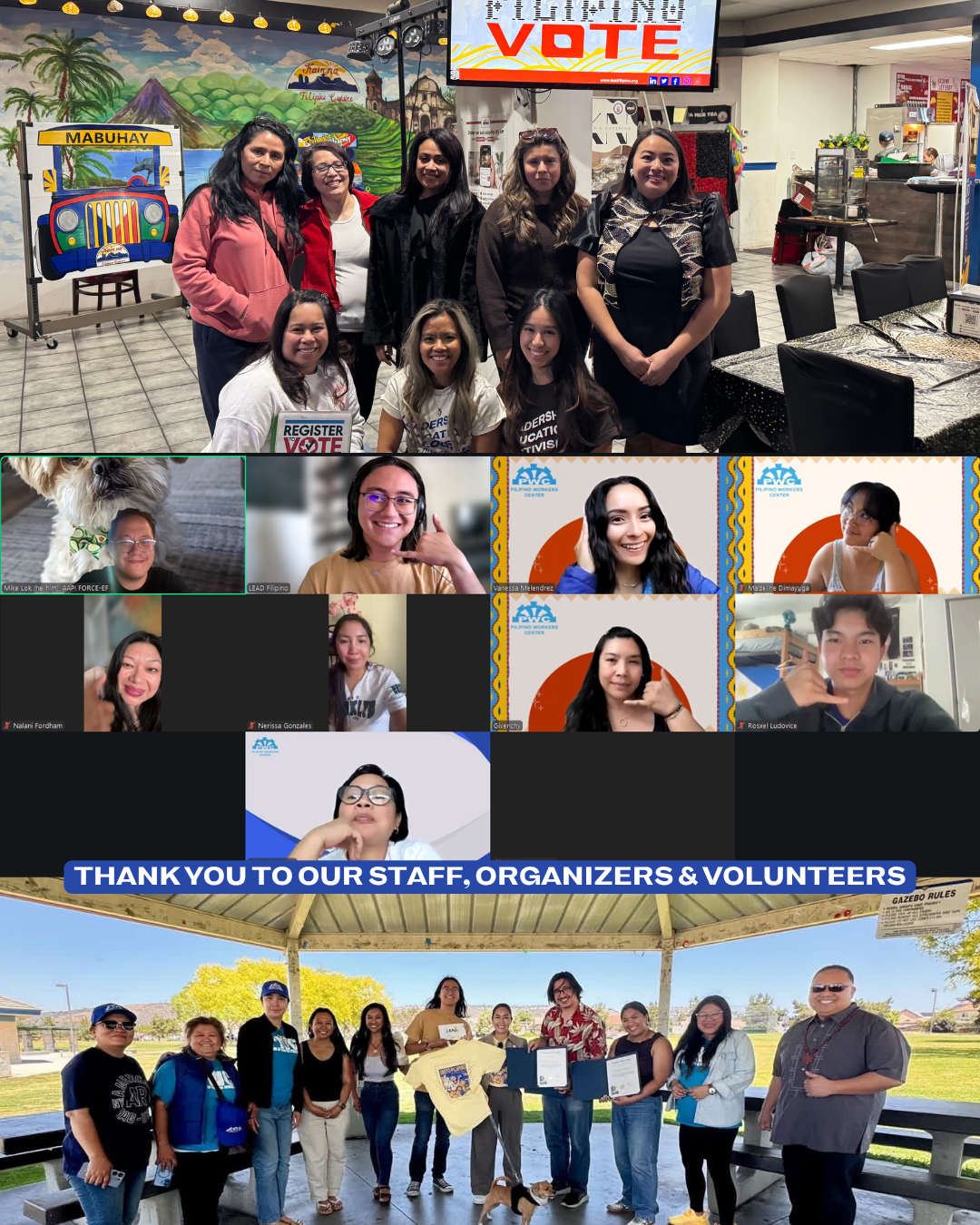
This is only the start. All the chapters we operate in will be voting on a new Governor, and CA will be voting on 14 propositions ranging from Voter IDs to a billionaire tax that, if passed, could dampen the effects of H.R. 1.
We need our community to stay aware and well-informed, so they turn a ballot that is most in line with their values. We’re opening the Voter Hub as a one-stop shop for voter education workshops and materials, as well as volunteer mobilization. Volunteers and organizations can conduct voter outreach because everyone has a voice that deserves to be heard.
We’re getting ready to turn out the Filipino vote, and we need you to join us!
Vote loud! Vote proud! Iboto Pilipino!
Want to Get Involved?
